
When Caregivers Look Away: A Supreme Court Case About Holding the Powerful Accountable
Must a Patient Die Before Anyone Is Held Accountable? The Supreme Court Will Decide
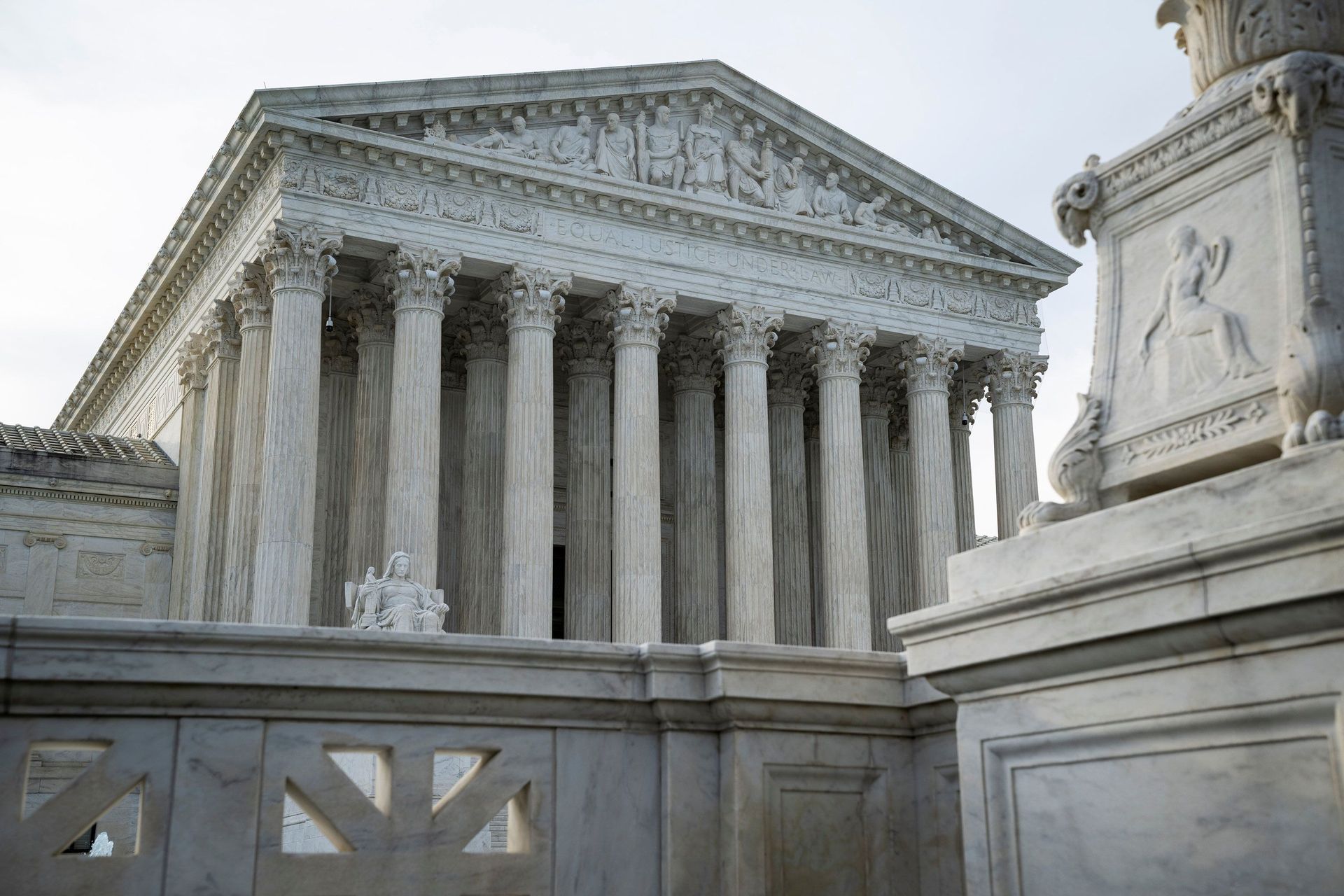
As reported in the Independent Mail this week, the U.S. Supreme Court has agreed to take up a case that asks a question every patient and every family should care about: when someone entrusted with your care ignores a serious medical condition, can you hold them answerable in court? On June 22, 2026, the Court agreed to hear Nielsen v. Watanabe — a decision that could quietly narrow one of the last avenues people have to demand accountability for medical neglect. We think that is worth paying attention to, and worth speaking plainly about.
What Happened
Kekai Watanabe was seriously injured in a fight at a federal prison in Honolulu in 2021. He says he asked to be taken to a hospital and to see a specialist. Instead, according to his court filings, he was handed over-the-counter pain medication and sent on his way. Months passed before an X-ray finally revealed the truth: a fractured tailbone, with bone fragments that had broken loose and migrated into the surrounding tissue. He received no real treatment for the injury until he was released in 2024 — years of avoidable pain that began with caregivers who, the lawsuit alleges, simply looked away.
Watanabe sued under the Eighth Amendment’s prohibition on cruel and unusual punishment. The law has long recognized that “deliberate indifference” to a serious medical need — knowing someone is hurt and choosing to do nothing — is a constitutional wrong. The unsettling question now before the Supreme Court is not whether ignoring his injury was acceptable. It is whether he is allowed to hold anyone accountable for it at all.
The Precedent on the Chopping Block
For more than forty years, the answer has been yes. In Bivens v. Six Unknown Named Agents (1971), the Supreme Court confirmed that federal officials can be made to personally answer in damages for violating someone’s constitutional rights. In Carlson v. Green, 446 U.S. 14 (1980), the Court applied that principle to a federal prisoner who died after officials failed to treat his asthma attack. The logic was simple and sound: the threat of personal liability is what makes people in power think twice before ignoring someone who is suffering.
In the decades since, the Court has steadily chipped away at that accountability, telling lower courts to throw out cases that differ in any “meaningful way” from the handful it has already blessed. Here, the Ninth Circuit refused to play that game, recognizing Watanabe’s claim for what it is — the same kind of medical indifference the Court condemned in Carlson. The defense’s response is telling: they argue the cases are different chiefly because Watanabe survived. In other words, the position being urged on the Court is that a patient must die before anyone can be held responsible for ignoring their suffering. The federal government, for its part, wants the door shut entirely, complaining that accountability is inconvenient and expensive for the officials who would face it.
Why This Reaches Far Beyond a Prison Cell
It would be a mistake to file this away as a case about prisoners. Strip away the setting and the question is one we confront in our practice every day: when a hospital, a nursing home, a physician, or a nurse ignores an obvious and serious medical need, does the person who is harmed have a meaningful way to seek justice? A right without a remedy is no right at all — and the willingness of courts to hold caregivers answerable is precisely what gives the standard of care its teeth.
We see the human cost of that principle in our work for families across South Carolina. A nursing home that ignores a resident’s worsening condition until it becomes a crisis. A hospital that brushes off symptoms that demanded urgent attention. A surgical injury that goes unaddressed while a patient is told there is nothing wrong. These are not abstractions. They are the cases we bring — and they depend on the same basic idea now being tested in Washington: that those who are trusted to provide care can be made to answer when they fail to provide it. When courts narrow accountability in one corner of the law, the reasoning rarely stays put. It seeps into how judges think about every patient who walks through the courthouse doors.
We will be watching Nielsen v. Watanabe closely as it heads toward argument in the coming term, with a decision expected by the summer of 2027. And we will keep doing what we have always done: standing with patients and families, and insisting that those who cause harm be held accountable for it.
This post is provided for general informational purposes and does not constitute legal advice or create an attorney-client relationship. If you or a loved one has been harmed by inadequate or negligent medical care — in a hospital, a nursing home, or any other setting — contact Dunaway Law Firm for a confidential consultation. Reporting on the underlying case appeared in the Independent Mail (USA TODAY Network), June 24, 2026.